
Publications
Jacky Lansley brings the valuable authority of her decades of experience as movement practitioner and choreographer to this critical study which makes a fresh and timely contribution to enlarging the field. Not only expanding discourse on dance and art, Lansley’s work reflects on the very nature of thinking and acting as an embodied human being – and indeed why art is important – in the age of computational, artificial intelligence.
Catherine Wood
Interim Director, Tate Modern
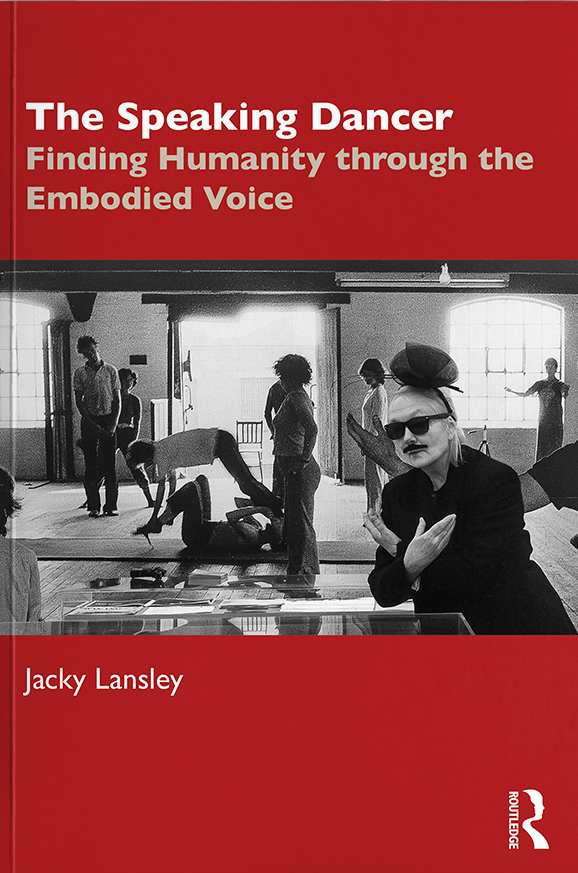
The Speaking Dancer: Finding Humanity Through the Embodied Voice
By Jacky Lansley
Published by Routledge, October 2026
“People who have made dance central to their lives are often trying to be better human beings, who see their dance making as a way to develop emotional intelligence and be more empathetic towards others.”
I wanted to write a book which placed dance at the centre of embodied life, and explore why this was becoming urgent in our tech industrialised world. It’s journey weaves together disciplines which are assumed to be separate: dance and speaking, dance and politics, dance and philosophy and even dance and art. Questioning these binary positions, I draw on my experiences of working in the theatre with actors and reflect on the physicality of voice and the speaking gesture; I investigate the impact of European and Russian physical theatre traditions and the dichotomies of working from both the ‘outside-in’ and ‘inside-out’; I discuss the interdisciplinary aesthetics of dance, with specific focus on the impact of modern and post modern visual art on dance and choreography. Referencing a wide range of works and writing by international artists, I explore the impact of abstraction and minimalism, the meaning of dance as object, and the strengths and vulnerabilities of its ephemerality.
Interlacing discussion of my own practice with wider global issues concerning gender, racism, ageism, migration and ecological degradation, I argue that the speaking dancer can be a potent political metaphor and practice towards positive change. Citing historical and archeological traces, I reflect on how human beings have always danced to communicate across difference and bring people together. I examine the importance of the thinking body and engage with urgent debates around our relationship with other animal species and how reclaiming the ‘wild’ is important to humanity. I discuss the importance for human beings to integrate mind, body and voice and reflect on the play, dancing and development of infants and children, whose voices and movements are, when allowed, integrated and balanced – and ask questions about the dangers of separating these sensory processes.
Offering examples of my own and others specific works, I explore how performance can be a site of experimentation in which alternative relations can be rehearsed, and reflect on how this model of collective solidarity, often across difference, can converge with a progressive broad base of cultural, political and eco groups. Overall the book explores a pluralistic vision of the speaking dancer as: artist, healer, teacher, collaborator and political activist – and how the body ‘speaks’ with or without words. It reflects on the devastating lack of support to the arts within the contemporary political climate, despite the fact that the imaginative skills and processes of artists, will be crucial as human beings try to tackle the urgent issues of climate change, war, poverty and the growing threat of technological industries which challenge embodied life.
The final chapter reviews some of the contexts, institutions, people and communities that are involved in supporting interdisciplinary approaches to the body, voice and mind. I reflect on why these contexts are often independent and alternative to mainstream culture and why finding a voice – whether as art, political protest, or personal empowerment – seems to be so challenging for some sectors of mainstream society. I end the book with a call for hopeful action – and invite readers to make their own dances which can be shared with others.
The Speaking Dancer is available for pre-order September 14th from Routledge and discount code 26SMAS3 until December 31st 2026.
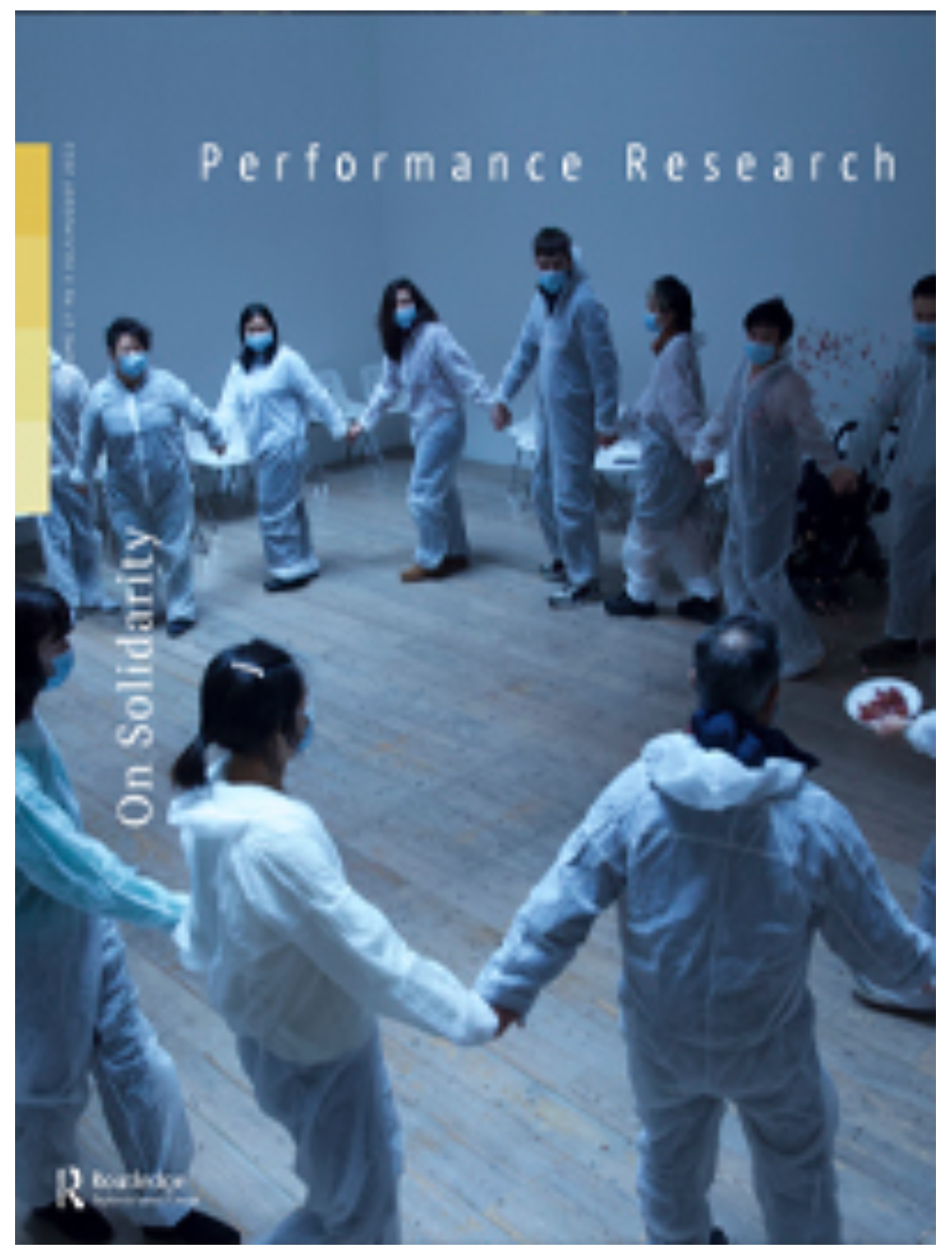
Performance Research
A Journal of the Performing Arts, Volume 27, Issue 5: On Solidarity
A Journal of the Performing Arts, Volume 27, Issue 5: On Solidarity
Becoming Us: Finding Solidarity Across Difference
Research Article by Jacky Lansley, Fergus Early, Jreena Green, Esther Huss, Ingrid Mackinnon & Tim Taylor
Published online May 2023
This group article explores personal and political experiences of six UK based artists who came together in 2016 to create a performance project ‘About Us’ and have continued to support each other throughout the pandemic. The article is a collage of writings and images which convey the personal stories of each author and reflect on differences and alliances concerning gender, racial identity, age, sexuality and social class.
Lansley introduces the context in which this diverse group came together. She identifies the research themes explored in ‘About Us’, which threw up fundamental questions concerning what it is to be both human and animal, and why we oppress and demonize other animal species. Green discusses these ideas from her perspective as a black woman, for whom the position that we are all animals is complex, raising issues concerning slavery and scientific racism. Huss discusses taking on the lease of an old miners’ institute in a quest to bring back cultural life to an impoverished area of Northumberland. She tracks historical and cultural links between the closure of the pits in the 80s and the present, identifying forms of protest which brought miners’ unions and artists together in solidarity. Taylor draws on writings by the philosopher Jacques Rancière to explore finding solidarity across difference within both his teaching and performance work. He discusses how the group supported him to develop a language that expressed intimate thoughts and feelings about being a gay man. Early uses poetry and parable to question our relationship to the planet and all the species we share it with. He interrogates the Judeo-Christian notion of hierarchical ‘civilization’ and explores the intelligence of trees. Mackinnon reflects on her position as a black woman and mother in a world that strives for unity, but continues to divide. She discusses how the group draws on strengths as movement and dance makers to share differences in ways that enable growth and understanding.
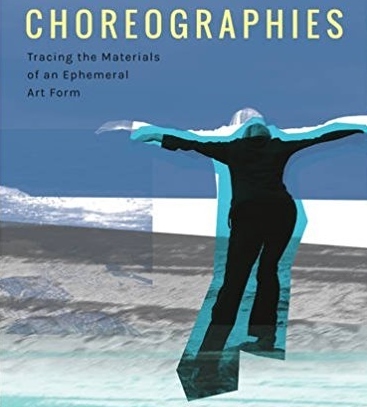
Choreographies: Tracing the Materials of an Ephemeral Art Form
By Jacky Lansley
Published by Intellect Books (2017)
Choreographer Jacky Lansley has been practising and performing for more than four decades. In Choreographies, she offers unique insight into the processes behind independent choreography and paints a vivid portrait of a rigorous practice that combines dance, performance art, visuals and a close attention to space and site.
Choreographies is both autobiography and archive—documenting production through rehearsal and performance photographs, illustrations, scores, process notes, reviews, audience feedback and interviews with both dancers and choreographers. Covering the author’s practice from 1975 to 2017, the book delves into an important period of change in dance as an art form—exploring British New Dance, postmodern dance, and experimental dance outside of a canonical US context. A critically engaged reflection that focuses on artistic process over finished product, Choreographies is a much-needed resource in the fields of dance and choreographic art making.
To purchase a signed copy please contact info@danceresearchstudio.com.
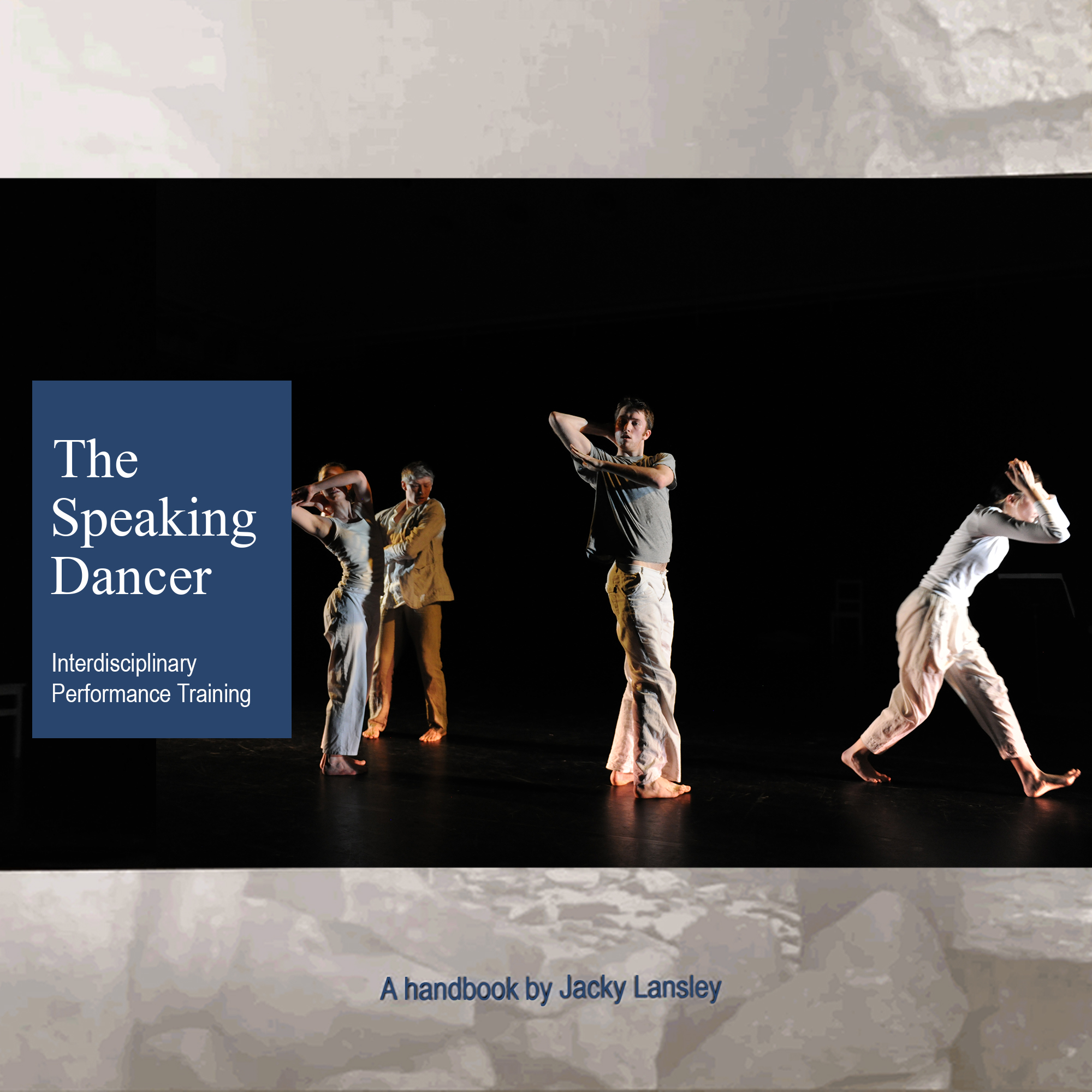
The Speaking Dancer: Interdisciplinary Performance Training (SDIPT)
Handbook
By Jacky Lansley
Publish by Dance Research Studio (2012)
The Speaking Dancer: Interdisciplinary Performance Training (SDIPT) is a unique professional development programme which offers students to opportunity the rethink their relationship to their practice, and begin to frame concerns about interdisciplinarity in a broader context.
The programme introduces cross disciplinary training methods and stimuli which support the artist as both performer and ‘author’. The programme is structures over weekend modules enabling accessibility and flexibility for working practitioners. Spread across urban, coastal and rural contexts, the programme gives participants the opportunity to engage with a range of landscapes and communities and consider creative approaches to performance practice across these different environments.
This handbook outlines key concepts and exercises for student preparation for the course’s four modules: The Interdisciplinary Performer; Improvisation and Emotional Embodiment; Visual Language and the Performer; and, The Choreographic Exchange.
Price: £7.00
Once you have completed your purchase, you will receive an email receipt with a link to a .pdf version of the booklet.
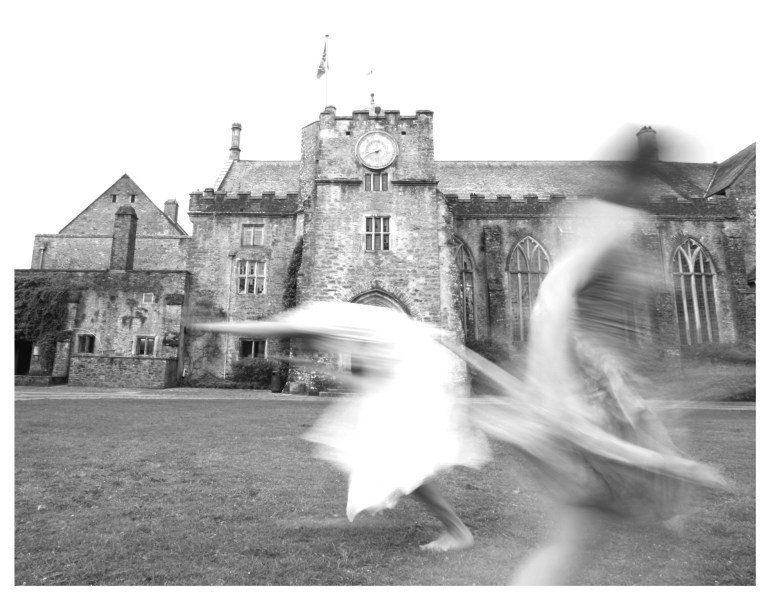
RADICAL CONNECTIONS
The Dartington Dance Festival/X6 Dance Space axis
By Jacky Lansley and Fergus Early
Published in ‘Training Places: Dartington College of Art‘, Special Edition of Theatre Dance and Performance Training (2018)
The article discusses the extraordinary time of ferment in British dance in the late 1970s and 1980s and the significant role played by the ‘axis’ between Dartington College of Arts and the London-based X6 Dance Space. This relationship centred upon members of the X6 collective and Mary O’Donnell Fulkerson, the dance leader in Dartington’s Theatre department, as well as other visiting US and European artists and teachers.
The importance of X6 as a platform for radical and innovative dance and performance is discussed, as is its role in hosting the first London workshops in Release (Fulkerson) and Contact Improvisation (Steve Paxton and Lisa Nelson). Critical connections are revealed between X6 and the Dartington Dance Festivals, together with the part played by X6’s quarterly magazine, New Dance.
The special issue reflects the diversity of art forms, writing registers, pedagogies and images for which Dartington was renowned, and includes contributions on and from: Peter Hulton on context and development of DCA, Chris Crickmay on Arts & Context, Jacky Lansley and Fergus Early on the Dance festival and X6, a roundtable reflection on Music, Gregg Whelan (Lone Twin) on Performance Writing, as well as multiple images and voices included in Donna Shilling’s record of the walk back to Dartington and Kevin & Kate Mount’s timeline photo essay.
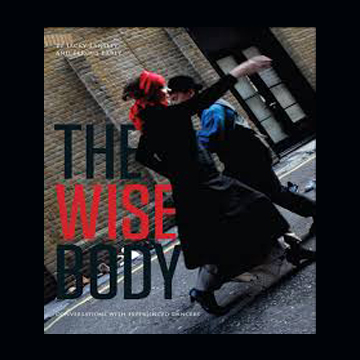
The Wise Body: Conversations with experienced dancers
Edited by Jacky Lansley and Fergus Early
Published by Intellect Books (2011)
In The Wise Body, choreographers Lansley and Early interview twelve distinguished dancers who continue to enjoy exceptionally long performing careers. The essays reflect wide-ranging concerns, and connect the experiences of senior practitioners in areas as diverse as health, philosophy, psychology and cross art form research, giving an extraordinary picture of the worldwide network of independent dancers and their practice.
Contributers: Philippe Priasso, Lisa Nelson, La Tati, Julyen Hamilton, Yoshito Ohno, Steve Paxton, Jacky Lansley, Will Gaines, Jane Dudley, Pauline de Groot, Bisakha Sarker, Fergus Early.